Thursday, June 16, 2011

Of this and that

Have been to some really nice little places in Normandy recently. Honfleur is a very pretty - and very touristy (mainly English) - seaside town. I think it's one of the places that pretenders to the British throne used to head off to in order to escape execution for treason and from which to plot their, hopefully, triumphant returns - people like Henry Tudor.


Also went to Trouville-sur-Mer and its better-known neighbour, Deauville - a famous beach resort where they have lots of horse-racing I think. It's the kind of place that's on the social calendar of the British smart set. Some amazing architecture there - huge (tall) beach front properties.


In Lisieux, they were holding some kind of town fête, with lots of activities for kids and a karaoke. No, don't worry, I didn't create an international incident by attempting to sing but there was one young guy there who was just amazing - very Leonard Cohen. He got a most enthusiastic round of applause.

We went to see the famous Bayeux tapestry. It was quite different from what I'd imagined. For some reason, I thought it would be a huge wall of tapestry but in fact it's a 70m x 1m strip that winds, behind glass, around a very dimly-lit room. It recounts the story of the Norman conquest of England. It's stunning - it's a series of scenes of medieval life, fables and mythical beasts - a bit like a massive cartoon strip. It was thought to be done by nuns in England, commissioned by Bishop Odo, William the Conqueror's half-brother, in time for the inauguration of Bayeux Cathedral in 1077.


We've been staying in a number of chambres-d'hôte - the French equivalent of a b+b. They're really comfortable and less impersonal than hotels. Guests generally eat breakfast together at the one table and we've had some interesting conversations, mostly with French people. One place was a huge old house in the middle of nowhere, run by an elderly lady whose business appeared to be ruled by the times of mass - breakfast was at 9am (guests had no choice in the matter) and you couldn't turn up before 6.30pm. We had the Louis XVI room - all blue and gold, including the bathroom - with very ornate furniture and a crucifix placed prominently on the wall. Stayed in a renovated farmhouse one night in a huge room for a family - there were two huge basins in the bathroom, lurid lime green - their coup de grâce, however, was giving us crème brulée for breakfast!

In the Pyrénées, we stayed with a wonderful couple, Gérard and Marcelle. They were unbelievably hospitable and sent us away with a pique-nique of bottles of wine, two jars of homemade paté, salamis and Seville oranges, which they brought back from Spain last week - just wonderful.


They are coming to NZ for the World Cup and we decided to do an exchange - they'll stay with us the nights they're going to be in Wellington. They don't speak any English, so their visit to NZ could be very interesting.

But the most memorable accommodation has, without doubt, been at an intimate bijoux residence in Favières in Northern France, run by Leslie and Jean-François. Very convivial and wonderful food. A truly exceptional table d'hôte. Merci å vous, mes chers cousins!

Tuesday, June 14, 2011

World War II

In Normandy, we visited the beaches of the D-Day landings and also Pegasus Bridge, where just after midnight on the night before D-Day, the twin bridges that cross the river were the target of a daring glider assault. Getting them was a crucial objective for the Allies because they could then advance east but it also blocked potential German reinforcements.


The beaches are really interesting - now have a dual tourist attraction as landing sites and also seaside holidays. We went to a really good museum at Arromanches, where the Allies built the artificial harbour, "Port Winston", that facilitated the landings of 2.5 million men and half a million vehicles during the invasion. Two harbors were built in bits in Britain - very few workers knew what they were making. When finished, sections were submerged in rivers away from the prying eyes of German aircraft and finally towed across the Channel at 6kph as the invasion began. At the same time, the British 47 Royal Marine Commando was storming Arromanches to clear the way. Very daring do - fantastic! The remnants of the harbour are still in the sea and on the beach.


Further along the coast you can see the best preserved Germany defensive post to survive the war. There are four concrete Nazi pillboxes, with guns still pointing out across the Channel - very chilling. Easy to see how so many died - on both sides.


When we were in Alsace, we went to the Natzweiler-Struthof concentration camp 60km south-west of Strasbourg. It's the only one on French soil but I guess Germany had annexed Alsace at that time. It's in the Vosges mountains, what was then a very popular spot for skiing and recreation. It was chosen by Himmler because of the nearby deposits of valuable pink granite and many inmates were worked to death to get it out. It's a surprisingly small camp and when you hear that 22,000 of the prisoners interned there died, it's horrendous to think of the numbers at the large camps. The camp provided the Reich University in Strasbourg with inmates for use in often lethal pseudo-medical experiments involving chemical warfare agents and infectious diseases. It's set in an area of such amazing natural beauty and it's so sobering to see the remains of the camp surrounded by guard towers and concentric electric fences. The crematorium oven, autopsy room and gas chamber really bear witness to the atrocities committed there. When you read about what went on, you wonder how anyone at all survived it.


And the last word. We went to Oradour-sur-Glane in the Dordogne, the scene of a brutal attack by a detachment of SS troops just four days after the announcement of the Allied landing in Normandy. At 2pm on Sat 10 June 1944, as a cordon of German soldiers closed all the exits to the town, a column of lorries and armoured cars entered the village. On Nazi orders, everyone gathered on the fairground. The women and children were locked in the church, the men in barns and garages. Grenade explosions and machine gun blasts killed many and fire and dynamite completed the massacre. 642 people died in that village that day. The town has been left as a burnt-out shell as a memorial. It's unclear why it happened - one school of thought is that the Nazis believed the village was sheltering resistance fighters but others say Oradour was chosen for its insignificance, the better to terrorise the French. Cars rust in the streets and the church where 500 women and children were killed is very moving. People were talking in the streets but there was complete silence in the church. I saw a number of elderly French women wiping their eyes.


Thursday, June 9, 2011

The Great War

We broke our epic 660km drive from Alsace to Bruges with a stop at Verdun in Lorraine. Verdun is remembered for the horrors of the 1916-1917 Battle of Verdun when about 1 million men and civilians died in almost a whole year of continuous fighting and bloodshed. Nine villages were obliterated without trace in the devastated region. The area is sobering. The terrain is really lumpy, full of craters made by the hundreds of thousands of shells that landed all over the place.


We walked up to one of the fortifications through pretty woods - it was incredibly muddy, all sticky and slippery at the same time. Got so much mud on the soles of our shoes, we must have been a good inch-and-a-half taller! Makes you think what it was like for those men living in all that mud with absolutely no trees or greenery around. One very moving memorial was the Trenches of the Bayonets. On 12 June 1916, two companies of the French army were sheltered in their trenches waiting for a ferocious artillery bombardment to end. It never did - incoming shells must have created a massive explosion that covered them in mud, burying them alive. They weren't found until three years later, when someone spotted several hundred bayonet tips sticking out of the ground. The soldiers were left where they died and a memorial to them was established at the spot.


Spent some time in Ypres in Southern Belgium. which was used as a supply depot for the British army during WWI. The Germans shelled Ypres to bits but like so many of these towns and cities, the town was rebuilt to its earlier design after the war, including a replica of the massive Cloth Hall. Part of its interior has been turned into the Flanders Fields museum, which explains, only too graphically, the horrors of that war. The names of over 50,000 British and Commonwealth troops who died in the area but who have no resting place are inscribed on the Menin Gate into Ypres.


We went to some of the war memorials and cemeteries in the area - it's hard to drive through such beautiful countryside and imagine it totally devoid of trees, just huge swathes of trenches, artillery and mud. The cemeteries are all beautifully maintained. Tyne Cot is the largest Commonwealth cemetery in the world. It's also the most important reminder of Passchendale. During the British offensive in 1917, tens of thousands of soldiers died there in a period of 100 days for a gain of barely 8km. Between 1919 and 1921 specialised exhumation companies brought in many thousands of bodies from the surrounding battlefields. Only 3,800 could be identified. It's all just so sad.


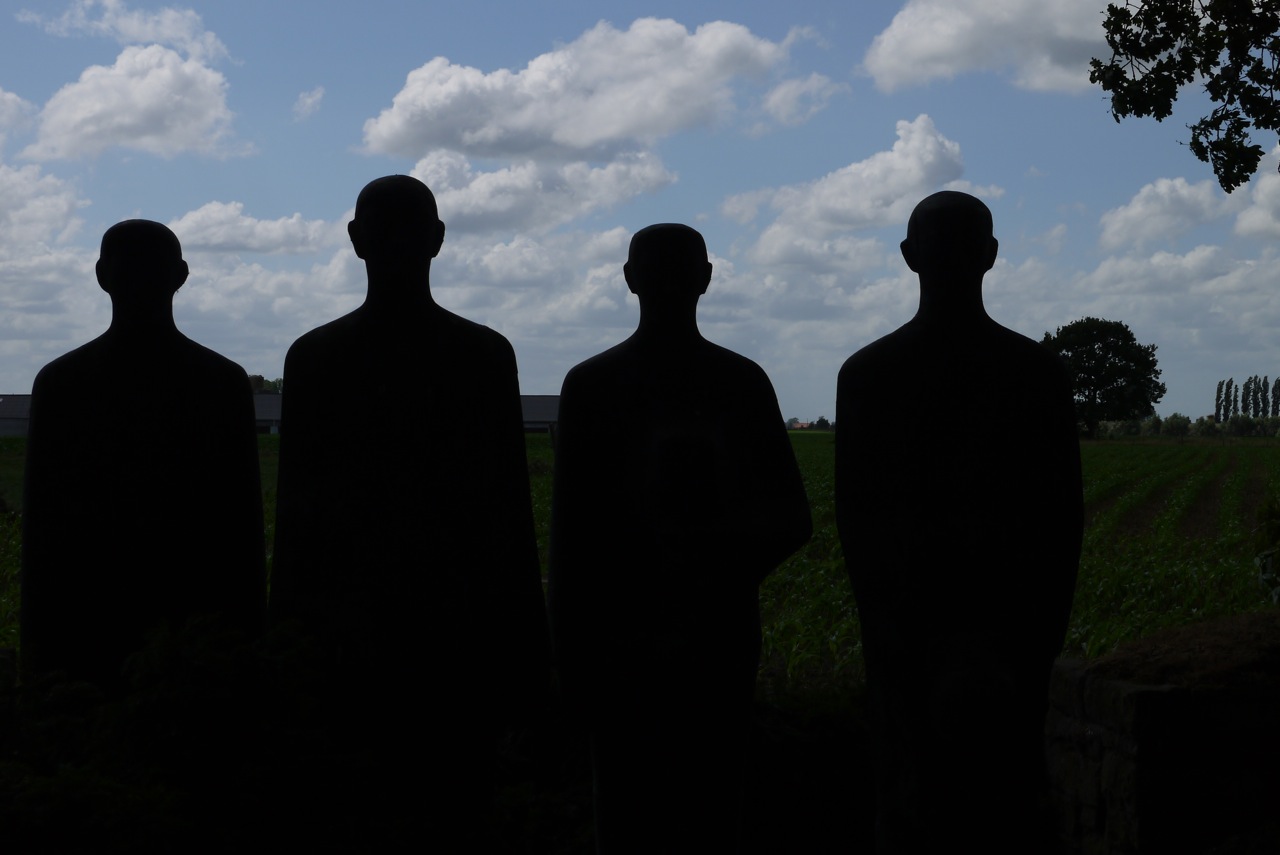
We went to a German military cemetery at Langemark. More than 44,000 soldiers lie there, nearly 25,000 of them in a mass grave.


We also went to a small town called Le Quesnoy, where a NZ contingent liberated the town from the Germans in 1918 after four years of occupation. A heavily fortified city with its huge ramparts, the battle involved flaming petrol bombs and using ladders to scale the walls. All sounds like a bit of a No. 8 fencing wire story. There's a Rue Helene Clark, previously known as Rue Marechal Joffre - I wonder how happy he'd have been about his street being renamed? Still, I guess he's got quite a few streets named after him in France!


Tuesday, June 7, 2011

Bruges

Bruges is a gorgeous place. An unspoiled medieval town, it's amazingly well preserved with winding streets and picturesque canals lined with beautiful buildings - a completely different style than the medieval buildings in Alsace. It was never heavily industrialised and has retained most of its medieval buildings. It also escaped major damage in both world wars. There are no billboards or high rises in the city but lots of glorious, huge, beautiful mature trees. There's a very exclusive archery club quite close to where we're staying - members of the Belgian royal family belong. Apparently the club's been in existence since the 12th century.


We're staying in an amazing bed and breakfast. An unexpectedly modern building, 10 minutes' walk from centre ville, set among medieval houses. The owners bought two adjoining sections and pulled the houses down, wanting to build a one-storey house for their retirement. But that wasn't acceptable to the Council - it had to be three storeys like the surrounding houses. But it couldn't be apartments ether. What to do? Why not build a big house and run a b+b! We're the only room on the top floor - got a really comfortable lounge and sun terrace that looks over adjoining roofs.


And forget Belgian food specialties of beer, chocolate and waffles - we've found one that beats them all! It's called Speculoos, the result of an annual competition to come up with a new commercial product. The first winner was something to do with an aid for the elderly to put on their support hose (!) but in the second year, the prize was taken by a housewife, who'd come up with the idea of using stale cinnamon biscuits (those windmill ones you can get at home) as the basis for a spread. It's delicious and has been a wild commercial success, now used everywhere - ice-cream flavoring, crepe filling etc. etc.


Alsace

We spent four glorious days in the French wine region of Alsace. Stayed in a little, medieval village called Riquewhir, near Colmar, and leaning out of our bedroom window, we can gaze on the vines that grow down the hills right to the edge of the village. All the towns around here are breathtakingly beautiful - half-timbered houses painted in all sorts of vibrant colours with eccentric turrets and balconies, cobbled courtyards, forged iron signs and flowers spilling in all directions. Many still have their city ramparts in tact. We've spent a couple of days driving around the villages and went north as far as Strasbourg - the number of tourists is just horrendous in the centre of Strasbourg. Coconut macaroons seem to be the local specialty and outside just about every shop selling them, there's a lady handing out samples to passers-by. I think we had four each one day - they certainly knock the socks off Schneeballen! And of course there are caves everywhere for degustation and wine-buying.


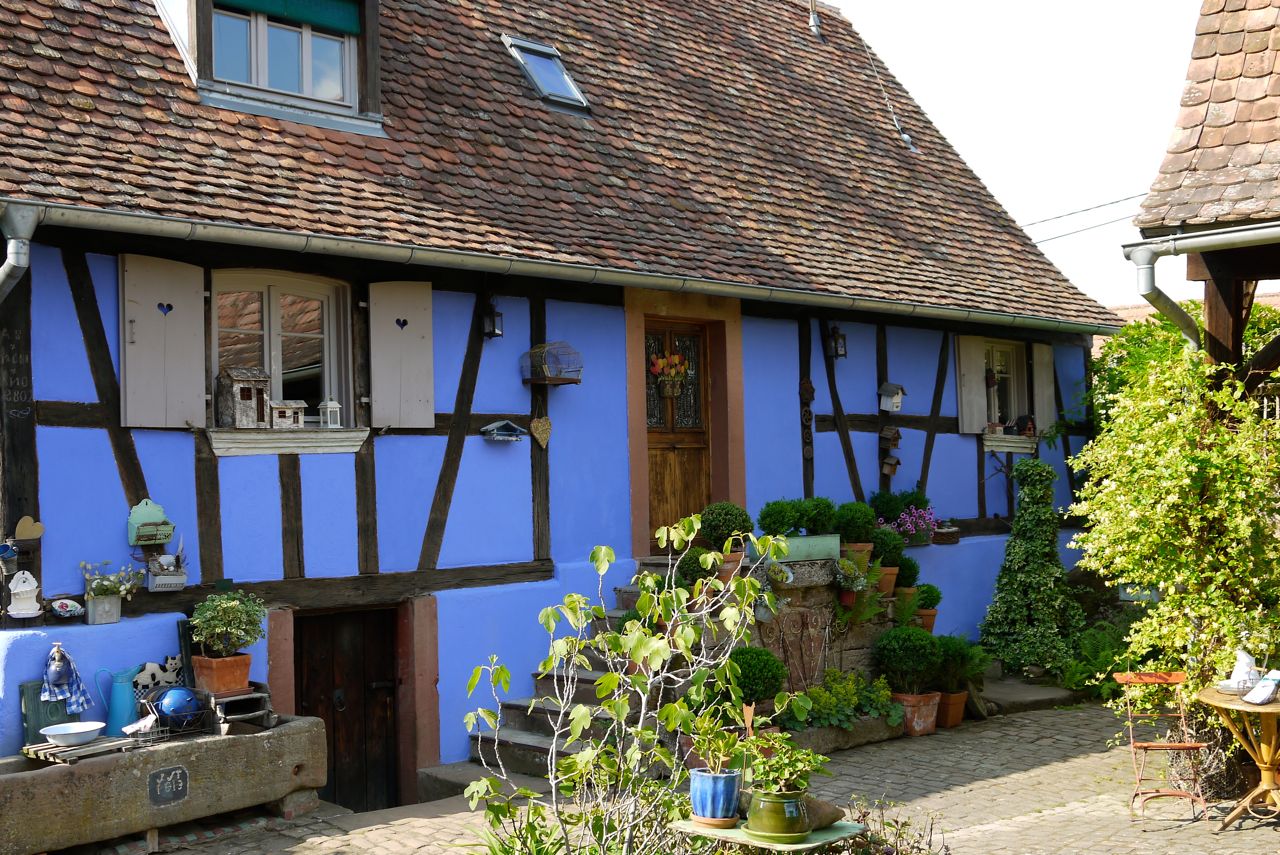
A bit of a surprise when you drive into Colmar and there in front of you is a 12-metre high Statue of Liberty. Frederic Auguste Bartholdi, whose greatest work it was, is Colmar's most famous son. One really pretty place we went to was Uttenhoffen, where many of the houses are painted a magnificent blue - le bleu de Hanau. Take a look.


Drove along a part of the Route de Cretes (Crests), partly built during WWWI to supply the French frontline troops. It's a skyline drive through the highest and most beautiful part of the Vosges. It's a ski area in winter but they cleverly extend their season but opening the slopes up to mountain-bikers in summer and take bikes on the chairlifts. It was a Sunday when we were there and there were lots of motorbikers, cyclists and walkers out - we even saw a couple of men on rollerblades, sweeping down the middle of the road, complete with ski poles - absolute madness! Also lots of parapenters - on one of our walks we came across a plaque that said something like - "To our friend Raymond, who took his last flight here". At least it's a beautiful spot for a last flight.


And my last word on cars - I've now seen the ultimate! We went to the Cite de l'Automobile museum in Mulhouse, which is apparently the largest car museum in the world with over 400 luxury cars. It started as a private collection of Bugattis and just grew. It is just immense - so big that there's a little train that can take you up and down the rows to see all the cars. An attendant told me that if you walk around the entire collection, you'll have walked 4km! And the ultimate car? A Bugatti Veyron - it can do up to 404 kph and costs a mere 1.3m euros! It actually did look pretty nice but where on earth could you drive it?? I'd be at the supermarket before the garage door had closed. The little bubble car would suit me much better. Apparently they could still be seen on the streets of Paris until 1989.


Thursday, June 2, 2011

Aufwiedersehen Deutschland

Our last day in Germany today - went to the Zeppelin Museum at Friedrichshafen on Lake Constance, where the first Zeppelin airships were tested in 1900. Although the captions weren't in English, I did come out knowing a lot more about Zeppelins than when I went in. Basically, I only knew about the Hindenburg going down in flames somewhere near New York. Had no idea of the number of flights they'd made (well over 500) or the distances they went - to Tokyo and Rio, as well as to the States and within Europe.

Some random thoughts on Germany -

- Smoking’s really prevalent – much more so than at home, among all ages.
- Lots of bikies on the road, touring - mostly men, in their 40s, 50s and 60s. It must be great in cold places but they must be really uncomfortable in their boots and leathers when it's hot.
- Germans are impressively ordered and everything's in pristine condition - exemplified when we saw two bikies giving their bikes a bit of a polish before setting off in the morning.
- You often see duvets and pillows put on window sills to air, hanging down on the roof - you'd think the roof would be filthy but German order and cleanliness clearly runs to outside as well.
- Germans do tend to be very identifiable - we were looking around the room in the hotel this morning when we were having breakfast and the other guests just couldn't be anything else. Very large - square really, women included - and ruddy. I'm sure they were having trouble settling on a nationality for us - hmmm, badly dressed, huge appetites - where on earth can they be from?
- Food and wine generally very cheap - explains their shape and ruddy complexion?

Wednesday, June 1, 2011

Of castles and kings

It rained heavily in the night and the temperature has plummeted - it was about 30 up in Rothenburg and it's 10 in Füssen! However it was dry today, though misty, perfect for visiting the two royal castles of Bavaria.


Hohenschwangau, the more sedate of the two, was built by Maximilian II of Bavaria in 1836; Neuschwanstein, the fairytale one, was the brainchild of his son, "Mad" King Ludwig II. It took 17 years to build - construction stopped on Ludwig's death and some of his ideas for the castle never eventuated. Ludwig was born in Munich in 1845 and was only 18 when he was crowned King of Bavaria. Apparently he initially attended to affairs of state but pretty quickly grew bored with that and turned to less subtle pursuits and became more and more obsessed with acting out his extravagant fantasies, hence Neuschwanstein.


Hohenschwangau was where he grew up and he had the multi-turreted Neuschwanstein built about half an hour's carriage ride away. It's the most photographed castle in Germany (can understand why) and apparently the Disney castle was based on it. It's quite small but is really pretty.

Just to finish off Ludwig - his excesses finally became too much and he was declared insane when he was 41. Three days later he died under mysterious circumstances - found drowned in a lake. Did he jump or was he held under?


Tuesday, May 31, 2011

The Romantic Road

The Romantic Road's one of Germany's most popular tourist routes, stretching 290km from Würzburg in the north to Füssen in the foothills of the Bavarian Alps. It's actually a contrived route - the result of a very successful marketing campaign by the 26 municipalities on the road, all after the tourist dollar.


We stopped at Dinkelsbühl and Nördlingen - both very pretty medieval towns, with complete city ramparts, cobblestone streets and huge 16th century houses, many with carvings and paintings depicting biblical and mythological themes. Some of the houses are so huge you can't believe they were ever housing just one family - most now appear to be in several apartments.

Started to rain quite hard as we were heading to Füssen in the foothills of the Bavarian Alps. It's mainly a base for those going to the castles at Neuschwanstein and Hohenschwangau but it has a 15th-century castle of its own which was once used by the bishops of Augsburg as a summer palace.

Germany doesn't just have romantic roads, it has very, very fast roads. Generally there's no speed limit on the autobahns and yesterday Andrew got up to 196 kph, stopped from reaching 200 kph only by a BMW pulling out in front of him. You do have to look out for that - drivers seem to think nothing of pulling out into the fast lane despite a very fast moving car coming up behind them. It's an amazing road system though - I don't think you can ever be much more than 20 minutes from a motorway. You can do large distances really quickly and we have - I noticed today they we've already done 1,450km!


Monday, May 30, 2011

Rothenburg ob der Tauber

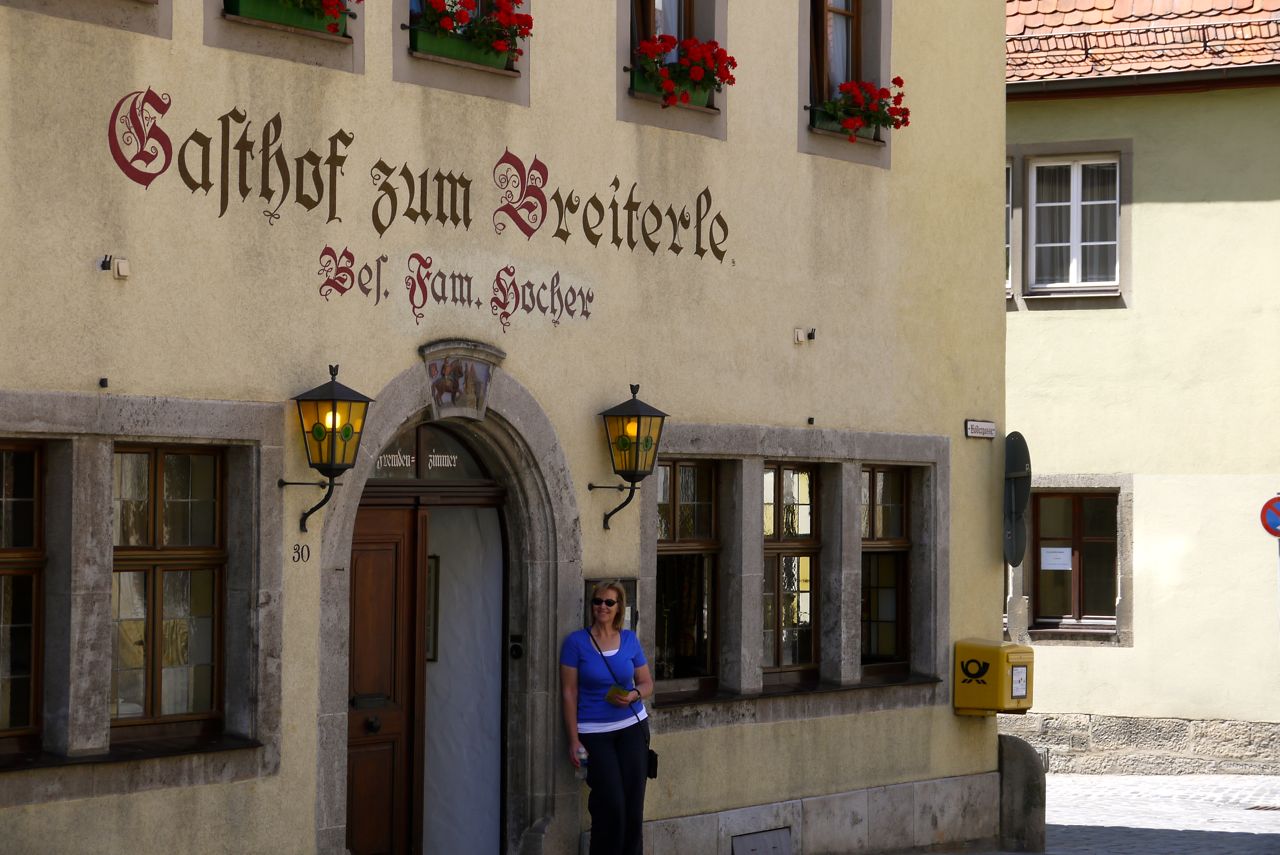
Rothenburg obT's billed as the best-preserved medieval city in Europe. We stayed in a little, old (very creaky floorboards - no sneaking in and out there unnoticed) guest house inside the city walls. Our room was full of old, painted furniture and I just have to tell you about German bed linen protocol. Double beds tend to be singles pushed together but each with completely separate bed linen. Separate fitted sheets and there's a neatly-folded individual duvet at the bottom of each bed but what's most interesting is what they do with the pillows. They're the large European ones which they stand up on its side and then enthusiastically karate-chop it right down the middle so it looks like you have a pair of giant ears at the head of each bed. Most bizarre!


Rothenburg itself is lovely - a very attractive place of half-timbered buildings, magnificent churches and covered ramparts - parts of the town hall date from 1250. You actually quite quickly get blase about the age of things - "puh, that's not even 500 years old"! Went to the Criminal Museum, supposed to be the only one of its kind in Europe. The collection gives an insight into the laws and punishments of medieval days. All pretty brutal - chastity belts, shame masks, a shame flute for bad musicians and even a cage for bakers who baked bread too small or too light. And you certainly didn't want to be a witch!

Huge numbers of tourists there and at least 75% of the shops must be souvenir/gift shops, including several Xmas shops. Apparently traditional German Xmas decorations are very popular all around the world now. The local specialty is Schneeballen (snow balls), billed as "round, sugar-coated pastries, fattening but delicious". They are huge, about the size of a base ball and look really good but are, in fact, horrible. However else we get fat this holiday (and believe me we are putting considerable focussed effort into it), it won't be by eating Schneeballen!